
+5511969988002
Speeches, Panels, etc.
I believe that sharing my discoveries and questions along the journey is a way to avoid keeping what I carry within myself. By letting ideas spread, I give deeper meaning not only to my work but also to my existence.
Imagination Medicine
In this talk I reflect on how screens and algorithms are draining our imaginative power, and how even artificial intelligence is taking over what once belonged to us. I present Imagination Medicine as a way to reclaim this force: using stories, symbols, and guided dreams to reach the subconscious, inspire healing, and open new possibilities for schools, companies, and society.
Breaking bubbles for change
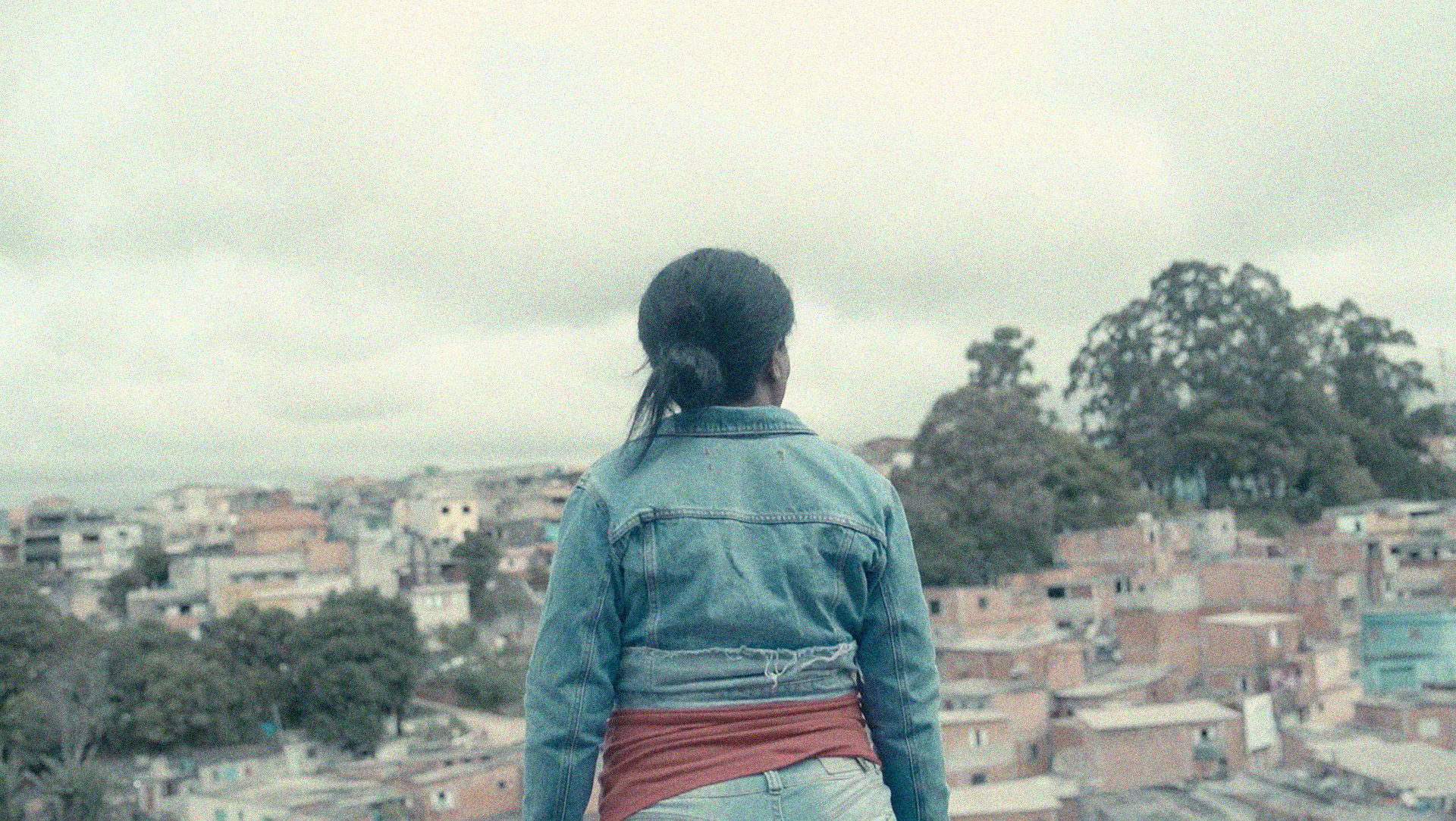
This talk took place during the panel held to launch my film Patchwork Garden, which addresses racism, gender violence, and women’s mental health in São Paulo’s outskirts. When asked how the film’s message could reach beyond the audience in the room, I responded with a reflection directed at communicators, mental health professionals, philanthropists, and the general public about the role of storytelling and entertainment in breaking bubbles and inspiring social change.
Owning Your Story
At the national convention of Sebrae, the main institution supporting entrepreneurship in Brazil, I joined a panel on storytelling for an audience of hundreds of small business owners. I shared not only tools and reflections on narrative but also my own experience as a small entrepreneur, showing how authentic stories can strengthen both brands and people.
Interview:
Alma Castilho on Reinvention, Truth, and the Courage to Create with Purpose
Originally published at Creativepool Editorial
Few creatives embody the art of reinvention quite like Alma André Castilho, a filmmaker, storyteller, and creative director whose career has spanned programming, advertising, theatre, and film. From her early beginnings as a teenage web designer during the dawn of the internet to shaping global campaigns and emotionally charged narratives, Alma has continually evolved while keeping one guiding principle intact: to tell the truth. Her work blurs the lines between poetry and precision, weaving emotion and insight into every frame, every line, and every story.
Today, from her home studio surrounded by Brazil’s Atlantic Forest, Alma collaborates with global brands and organizations while championing a deeply human approach to creativity. For her, technology may accelerate production, but true artistry lies in care, curiosity, and courage — the courage to resist formulas, to explore the uncomfortable, and to create with empathy and depth. In this conversation, she reflects on her creative process, her sources of inspiration, and how she continues to find meaning in an industry that too often forgets its own humanity.
How did you first get into the industry?
I started working in an agency when I was 15. The internet was just beginning, and websites were the digital pantheon of brands. I knocked on the door and got an internship as a programmer, and soon after as a web designer. At 18, I was selected for an internship at AgênciaClick — then one of the world's largest and most awarded digital advertising agencies. That’s when the game really began.
Where are you based now and who do you work for?
I live two hours from São Paulo, on the coast, in a house nestled in the Atlantic Forest. From here, I run my own studio, collaborating with brands, agencies, and organizations. Depending on the project, I can bring together modular teams — assembling the right talent and resources for each challenge — or step in as an independent creative, offering my craft directly. This flexibility allows me to adapt to both large-scale productions and more intimate projects, without compromising quality or vision.
What is your personal background and what role did it play in your career?
I spent my childhood holidays listening to my grandmother’s stories while she cooked and tidied the house. Being born in an analog era, I read comic books and magazines, played outdoors, and invented stories with a VHS camera or by recording “podcasts” on cassette tapes. I had a lot of creative freedom, which shaped the way I approach ideas today.
I also had the chance to visit a TV network behind the scenes, where I was fascinated by how programs were produced and how audiences responded. That experience sparked my early curiosity about storytelling and audience behavior — not just how stories were told, but why people connected with them. Later, at university, I studied sociology, anthropology, psychology, and communication theory, which deepened this perspective.
When I combined cinema, theatre, and entertainment with advertising, everything clicked. At a time when mainstream advertising was still dominated by newspapers, magazines, and 30-second commercials, I began introducing multimedia narratives to brands, shaped by this eclectic background. That mix — personal, academic, and professional — still drives my approach today, whether I’m creating entertainment formats, branded content, or documentary films.
If you weren’t in your current industry, what would you be doing?
I always wanted to be a scientist, but when I realized it involved math (and I’ve always been unmistakably humanities-driven), I was traumatized. Maybe if someone had told me that not every scientist needs to do math, things could have turned out differently.
At one point, I thought I’d study journalism because I believed that was how I would “change the world.” In quotes now, but at the time, it was what I truly felt. Then, in my first job, I met two journalists completely disillusioned with the profession, and I decided to study advertising instead. Later, when I did theatre, I was convinced I would leave everything behind to become an actor.
Like every authentic ADHD mind, I have a genuine interest in many unrelated universes. In the end, if money for survival weren’t part of the equation, I would probably have had many different careers — because life feels too short not to try everything.
Can you explain your creative process? What makes it unique?
In my theatre classes, I studied the Stanislavski Method, and it changed my life. It’s a way of creating characters that feel real: you don’t imitate from the outside, you work from the inside, connecting with emotions, memories, and motivations until they become authentic.
I began applying this method to every story or campaign I created, and it worked. Instead of treating an audience as a faceless “target” or personas as shallow simulations, I connect with universal feelings and adapt them to the language and repertoire of the people I want to reach. Before I start, I immerse myself deeply in the universe to be portrayed and absorb its references. Then, I build one or more characters for myself, roles I can step into, carrying within me everything I need to create that project authentically.
How would you describe your style?
Poetic but sharp. Emotional without being melodramatic. Intimate in tone. I avoid clichés. I like images and words that leave space for silence, because silence can be more powerful than slogans. And I try to follow the advice Robert McKee once wrote for me on the back cover of Story: tell the truth. Even in fiction, even in a campaign to sell diapers, I try to tell the truth.
Which individuals do you gain inspiration from? Do you have any heroes in the industry?
I draw inspiration from people who turned their lives into art in the service of the planet. Sebastião Salgado, one of the most outstanding contemporary photographers, captured the essence of humanity and, when he lost hope in it, replanted a forest here in Brazil. Douglas and Kristine Tompkins co-founded Esprit and The North Face, then used their fortune to acquire and restore vast lands in Patagonia—eventually donating millions of acres to create or expand national parks. Greta Thunberg, with her visceral gift for communication, dared to challenge the establishment. In the world of communication, Alex Bogusky left the influential agency he helped lead to launch COMMON, a creative community accelerating social ventures, and began investing in mission-driven startups. These are people who questioned the rules and learned how to use the gears of a sick system to restore the planetary one.
What tips would you give to aspiring creatives looking for work?
Preserve your curiosity and your ability to be enchanted by something new every day, even on stormy days. Never believe you are only the character you built to survive: you are much more. Play the game, but don’t try to fit in. The industry will pressure you to copy what worked before. Resist that. Show the world what only you could make, even if it feels strange or uncomfortable.
What tips would you give to other professionals to get more clients?
Stop chasing clients like trophies. Build partnerships. Find the ones who share your values, and make yourself visible to them. That’s where the real work happens.
Can you share a memorable experience from your career journey that shaped your approach to creativity?
The most significant creative leaps in my life came every time I was forced to reinvent myself. Every time I was fired, every time I ran out of money, every time I ended a relationship. Every time I left behind one identity to step into another: when I walked away from programming to try art direction, when I left art direction at a giant agency to start again as a copywriter in a small neighborhood agency, when I left the biggest agency in Brazil to open my own film production company without ever having produced a film.
When I broke a partnership in my successful production company, left São Paulo, bought a house in the forest, and two months later, the pandemic began. When I opened up about being gender-fluid, knowing the world wouldn’t become kinder because of it. Each time I trusted myself without any certainty of what would come next, I dove into a process of reinvention. And each reinvention made me more creative, more skilled, more sensitive, and most importantly, a better human being.
What kind of tools/kit/software could you not do without?
Paper and pen. My playlist of songs that inspire me. Google Docs. Adobe Premiere and Photoshop. My secret plugins. And now, the AI tools that are becoming part of my workflows: ChatGPT, Tldv, Midjourney, Kling, Visual Electric, and others that keep being added along the way.
What’s your secret to staying inspired and motivated?
I live in a forest by the sea. Every morning, I’m reminded that there are more textures, sounds, and patterns in nature than in any creative brief.
What’s the work achievement you’re most proud of?
The achievement I’m most proud of is always the one I’m working on in the moment, because that’s where I put my heart first. But to name a few: I have a special affection for my book Isabela’s Window, which tells the story of a child with terminal cancer who learns to use imagination to face pain. The book went on to be used as support material in pediatric oncology palliative care in Brazil. It also inspired a larger project, which I still hope to bring to life, called Imagination Medicine.
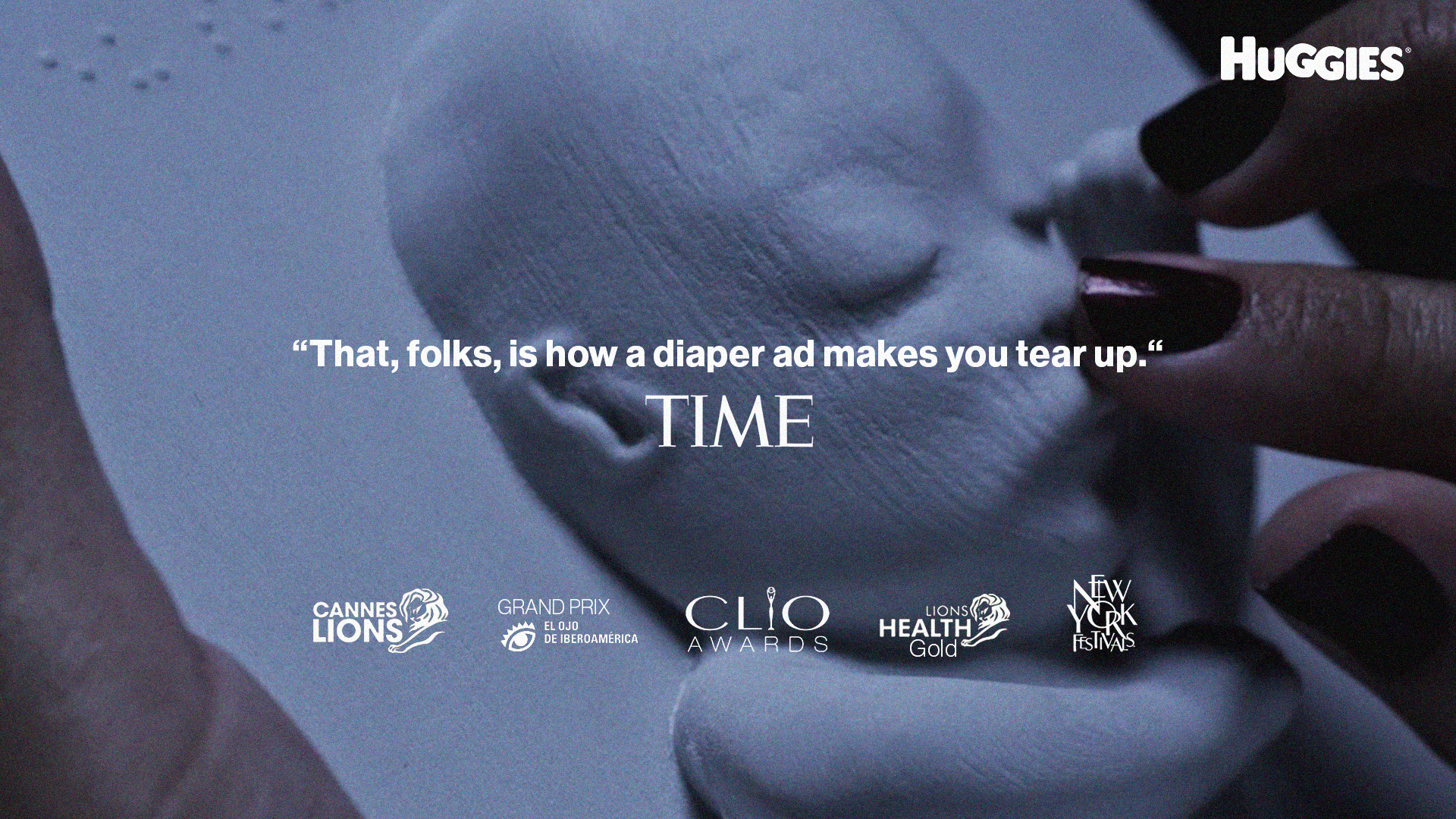
In advertising, one of my proudest works is Meeting Murilo, the story of a blind mother-to-be who “meets” her son through a 3D-printed ultrasound. The film traveled the world, won every award, and became a timeless classic. Recently, I even saw it plagiarized in a Netflix series, ten years after its launch.
I’m also proud of my short film Reencounter, which tells the story of a grandfather reconnecting with his grown grandson. It was branded content that won film festivals — and it also gave me back a childhood friend, who called me after seeing the film and realizing I had written the story.
Finally, The Last Guardians, a documentary I executive-produced through a label I created, tells the story of how the deforestation of the Amazon and the destruction of the most sacred tree of the Huni Kuin people impact their spirituality and the survival of those responsible for keeping the forest standing.
As someone with experience in the industry, what trends do you foresee shaping the future of creativity?
Like in any other industry, the focus will inevitably be on productivity and profit. Which means AI will not necessarily improve the quality of what is delivered. The trend is to accelerate, cut costs, cut people, and homogenize. On the other hand, individuals will be able to create works that once seemed impossible to achieve alone or with limited resources. This will provide visibility and opportunities for talents whose potential has remained untapped.
Beyond the frenzy surrounding AI, audiences will eventually become saturated by so much artificiality, and human art will undergo a renaissance: a moment when the creative process itself will be valued more than the result. Not within the industry, but in the field of art. After all, art is the human expression of an inner universe. And while machines may emulate it, they can never truly create it.
What do you think sets apart truly exceptional creatives from the rest of the pack?
The ability to care. To deliver with depth, to impress with purpose, and to genuinely care about the story, the people, and the impact.
Exceptional creatives are the ones who go beyond technique and awards. They listen deeply, they immerse themselves, they take responsibility for what their work puts into the world. While many create to feed performance metrics or their own vanity, the exceptional ones create from a place of truth and empathy. They know that ideas shape culture, behavior, and even the future of the planet.
What sets them apart is not only talent, but courage. The courage to resist formulas, to tell uncomfortable truths, to risk being misunderstood. And at the same time, the humility to serve something bigger than themselves.
How do you think technology has influenced the creative industries and how have you adapted to these changes?
Technology has democratized creation, but it has also accelerated superficiality. Algorithms have made content consumption voracious, turning communication into fast food. In the middle of this, the stories that truly matter — the ones that take time to be produced and time to be digested — pass almost invisible in the feed.
Technology has also reshaped the audience’s brains: less critical, with a reduced ability to interpret, little room for reflection, shorter attention spans, more prone to replication than questioning, and increasingly intolerant. We need to adapt to this reality while still resisting it. The human brain should not be treated as a mere dopamine reservoir. Around it lives a whole human being, who deserves to be stimulated to reach their full potential of existence, not reduced to a lab rat trained for consumption.
I’ve adapted by embracing technology with a critical eye. I interrogate the tools I use and apply them to expand imagination, not to flatten it. For me, the real challenge is to protect depth and meaning in a system that rewards speed and sameness.
What is the one thing that you would change about the industry?
Greed. Too often, creativity is sacrificed in the name of profit, speed, and scale. The industry has become obsessed with producing more for less, squeezing people and ideas until there’s nothing authentic left. I would trade this culture of extraction for one of care — care for people, for stories, for the planet. Because without that, the work may generate numbers, but it doesn’t generate meaning.
Any websites, books or resources you would recommend?
Story by Robert McKee. Building a Character by Konstantin Stanislavski (or better yet, take six months of theatre classes to experience the method). The Social Animal by David Brooks. My own book, Isabela’s Window, which I mentioned earlier, is free on Kindle Unlimited. If you don’t like it, at least it won’t cost you anything.
A tip I often give is to wander randomly through streaming platforms and YouTube channels, clicking on content you wouldn’t normally choose. It’s a way to break the algorithm, step out of your bubble, discover other realities, and expand your repertoire.
And sometimes the best resource isn’t digital at all: take a piece of paper and a pen, put on your headphones, go for a walk or a bike ride, and you’ll find the greatest source of inspiration.
Few creatives embody the art of reinvention quite like Alma André Castilho, a filmmaker, storyteller, and creative director whose career has spanned programming, advertising, theatre, and film. From her early beginnings as a teenage web designer during the dawn of the internet to shaping global campaigns and emotionally charged narratives, Alma has continually evolved while keeping one guiding principle intact: to tell the truth. Her work blurs the lines between poetry and precision, weaving emotion and insight into every frame, every line, and every story.
Today, from her home studio surrounded by Brazil’s Atlantic Forest, Alma collaborates with global brands and organizations while championing a deeply human approach to creativity. For her, technology may accelerate production, but true artistry lies in care, curiosity, and courage — the courage to resist formulas, to explore the uncomfortable, and to create with empathy and depth. In this conversation, she reflects on her creative process, her sources of inspiration, and how she continues to find meaning in an industry that too often forgets its own humanity.
How did you first get into the industry?
I started working in an agency when I was 15. The internet was just beginning, and websites were the digital pantheon of brands. I knocked on the door and got an internship as a programmer, and soon after as a web designer. At 18, I was selected for an internship at AgênciaClick — then one of the world's largest and most awarded digital advertising agencies. That’s when the game really began.
Where are you based now and who do you work for?
I live two hours from São Paulo, on the coast, in a house nestled in the Atlantic Forest. From here, I run my own studio, collaborating with brands, agencies, and organizations. Depending on the project, I can bring together modular teams — assembling the right talent and resources for each challenge — or step in as an independent creative, offering my craft directly. This flexibility allows me to adapt to both large-scale productions and more intimate projects, without compromising quality or vision.
What is your personal background and what role did it play in your career?
I spent my childhood holidays listening to my grandmother’s stories while she cooked and tidied the house. Being born in an analog era, I read comic books and magazines, played outdoors, and invented stories with a VHS camera or by recording “podcasts” on cassette tapes. I had a lot of creative freedom, which shaped the way I approach ideas today.
I also had the chance to visit a TV network behind the scenes, where I was fascinated by how programs were produced and how audiences responded. That experience sparked my early curiosity about storytelling and audience behavior — not just how stories were told, but why people connected with them. Later, at university, I studied sociology, anthropology, psychology, and communication theory, which deepened this perspective.
When I combined cinema, theatre, and entertainment with advertising, everything clicked. At a time when mainstream advertising was still dominated by newspapers, magazines, and 30-second commercials, I began introducing multimedia narratives to brands, shaped by this eclectic background. That mix — personal, academic, and professional — still drives my approach today, whether I’m creating entertainment formats, branded content, or documentary films.
If you weren’t in your current industry, what would you be doing?
I always wanted to be a scientist, but when I realized it involved math (and I’ve always been unmistakably humanities-driven), I was traumatized. Maybe if someone had told me that not every scientist needs to do math, things could have turned out differently.
At one point, I thought I’d study journalism because I believed that was how I would “change the world.” In quotes now, but at the time, it was what I truly felt. Then, in my first job, I met two journalists completely disillusioned with the profession, and I decided to study advertising instead. Later, when I did theatre, I was convinced I would leave everything behind to become an actor.
Like every authentic ADHD mind, I have a genuine interest in many unrelated universes. In the end, if money for survival weren’t part of the equation, I would probably have had many different careers — because life feels too short not to try everything.
Can you explain your creative process? What makes it unique?
In my theatre classes, I studied the Stanislavski Method, and it changed my life. It’s a way of creating characters that feel real: you don’t imitate from the outside, you work from the inside, connecting with emotions, memories, and motivations until they become authentic.
I began applying this method to every story or campaign I created, and it worked. Instead of treating an audience as a faceless “target” or personas as shallow simulations, I connect with universal feelings and adapt them to the language and repertoire of the people I want to reach. Before I start, I immerse myself deeply in the universe to be portrayed and absorb its references. Then, I build one or more characters for myself, roles I can step into, carrying within me everything I need to create that project authentically.
How would you describe your style?
Poetic but sharp. Emotional without being melodramatic. Intimate in tone. I avoid clichés. I like images and words that leave space for silence, because silence can be more powerful than slogans. And I try to follow the advice Robert McKee once wrote for me on the back cover of Story: tell the truth. Even in fiction, even in a campaign to sell diapers, I try to tell the truth.
Which individuals do you gain inspiration from? Do you have any heroes in the industry?
I draw inspiration from people who turned their lives into art in the service of the planet. Sebastião Salgado, one of the most outstanding contemporary photographers, captured the essence of humanity and, when he lost hope in it, replanted a forest here in Brazil. Douglas and Kristine Tompkins co-founded Esprit and The North Face, then used their fortune to acquire and restore vast lands in Patagonia—eventually donating millions of acres to create or expand national parks. Greta Thunberg, with her visceral gift for communication, dared to challenge the establishment. In the world of communication, Alex Bogusky left the influential agency he helped lead to launch COMMON, a creative community accelerating social ventures, and began investing in mission-driven startups. These are people who questioned the rules and learned how to use the gears of a sick system to restore the planetary one.
What tips would you give to aspiring creatives looking for work?
Preserve your curiosity and your ability to be enchanted by something new every day, even on stormy days. Never believe you are only the character you built to survive: you are much more. Play the game, but don’t try to fit in. The industry will pressure you to copy what worked before. Resist that. Show the world what only you could make, even if it feels strange or uncomfortable.
What tips would you give to other professionals to get more clients?
Stop chasing clients like trophies. Build partnerships. Find the ones who share your values, and make yourself visible to them. That’s where the real work happens.
Can you share a memorable experience from your career journey that shaped your approach to creativity?
The most significant creative leaps in my life came every time I was forced to reinvent myself. Every time I was fired, every time I ran out of money, every time I ended a relationship. Every time I left behind one identity to step into another: when I walked away from programming to try art direction, when I left art direction at a giant agency to start again as a copywriter in a small neighborhood agency, when I left the biggest agency in Brazil to open my own film production company without ever having produced a film.
When I broke a partnership in my successful production company, left São Paulo, bought a house in the forest, and two months later, the pandemic began. When I opened up about being gender-fluid, knowing the world wouldn’t become kinder because of it. Each time I trusted myself without any certainty of what would come next, I dove into a process of reinvention. And each reinvention made me more creative, more skilled, more sensitive, and most importantly, a better human being.
What kind of tools/kit/software could you not do without?
Paper and pen. My playlist of songs that inspire me. Google Docs. Adobe Premiere and Photoshop. My secret plugins. And now, the AI tools that are becoming part of my workflows: ChatGPT, Tldv, Midjourney, Kling, Visual Electric, and others that keep being added along the way.
What’s your secret to staying inspired and motivated?
I live in a forest by the sea. Every morning, I’m reminded that there are more textures, sounds, and patterns in nature than in any creative brief.
What’s the work achievement you’re most proud of?
The achievement I’m most proud of is always the one I’m working on in the moment, because that’s where I put my heart first. But to name a few: I have a special affection for my book Isabela’s Window, which tells the story of a child with terminal cancer who learns to use imagination to face pain. The book went on to be used as support material in pediatric oncology palliative care in Brazil. It also inspired a larger project, which I still hope to bring to life, called Imagination Medicine.
In advertising, one of my proudest works is Meeting Murilo, the story of a blind mother-to-be who “meets” her son through a 3D-printed ultrasound. The film traveled the world, won every award, and became a timeless classic. Recently, I even saw it plagiarized in a Netflix series, ten years after its launch.
I’m also proud of my short film Reencounter, which tells the story of a grandfather reconnecting with his grown grandson. It was branded content that won film festivals — and it also gave me back a childhood friend, who called me after seeing the film and realizing I had written the story.
Finally, The Last Guardians, a documentary I executive-produced through a label I created, tells the story of how the deforestation of the Amazon and the destruction of the most sacred tree of the Huni Kuin people impact their spirituality and the survival of those responsible for keeping the forest standing.
As someone with experience in the industry, what trends do you foresee shaping the future of creativity?
Like in any other industry, the focus will inevitably be on productivity and profit. Which means AI will not necessarily improve the quality of what is delivered. The trend is to accelerate, cut costs, cut people, and homogenize. On the other hand, individuals will be able to create works that once seemed impossible to achieve alone or with limited resources. This will provide visibility and opportunities for talents whose potential has remained untapped.
Beyond the frenzy surrounding AI, audiences will eventually become saturated by so much artificiality, and human art will undergo a renaissance: a moment when the creative process itself will be valued more than the result. Not within the industry, but in the field of art. After all, art is the human expression of an inner universe. And while machines may emulate it, they can never truly create it.
What do you think sets apart truly exceptional creatives from the rest of the pack?
The ability to care. To deliver with depth, to impress with purpose, and to genuinely care about the story, the people, and the impact.
Exceptional creatives are the ones who go beyond technique and awards. They listen deeply, they immerse themselves, they take responsibility for what their work puts into the world. While many create to feed performance metrics or their own vanity, the exceptional ones create from a place of truth and empathy. They know that ideas shape culture, behavior, and even the future of the planet.
What sets them apart is not only talent, but courage. The courage to resist formulas, to tell uncomfortable truths, to risk being misunderstood. And at the same time, the humility to serve something bigger than themselves.
How do you think technology has influenced the creative industries and how have you adapted to these changes?
Technology has democratized creation, but it has also accelerated superficiality. Algorithms have made content consumption voracious, turning communication into fast food. In the middle of this, the stories that truly matter — the ones that take time to be produced and time to be digested — pass almost invisible in the feed.
Technology has also reshaped the audience’s brains: less critical, with a reduced ability to interpret, little room for reflection, shorter attention spans, more prone to replication than questioning, and increasingly intolerant. We need to adapt to this reality while still resisting it. The human brain should not be treated as a mere dopamine reservoir. Around it lives a whole human being, who deserves to be stimulated to reach their full potential of existence, not reduced to a lab rat trained for consumption.
I’ve adapted by embracing technology with a critical eye. I interrogate the tools I use and apply them to expand imagination, not to flatten it. For me, the real challenge is to protect depth and meaning in a system that rewards speed and sameness.
What is the one thing that you would change about the industry?
Greed. Too often, creativity is sacrificed in the name of profit, speed, and scale. The industry has become obsessed with producing more for less, squeezing people and ideas until there’s nothing authentic left. I would trade this culture of extraction for one of care — care for people, for stories, for the planet. Because without that, the work may generate numbers, but it doesn’t generate meaning.
Any websites, books or resources you would recommend?
Story by Robert McKee. Building a Character by Konstantin Stanislavski (or better yet, take six months of theatre classes to experience the method). The Social Animal by David Brooks. My own book, Isabela’s Window, which I mentioned earlier, is free on Kindle Unlimited. If you don’t like it, at least it won’t cost you anything.
A tip I often give is to wander randomly through streaming platforms and YouTube channels, clicking on content you wouldn’t normally choose. It’s a way to break the algorithm, step out of your bubble, discover other realities, and expand your repertoire.
And sometimes the best resource isn’t digital at all: take a piece of paper and a pen, put on your headphones, go for a walk or a bike ride, and you’ll find the greatest source of inspiration.
Selected Works
Contact
WhatsApp: +55 11 969 988 002
Email: [email protected]